Scholarly Concentrations

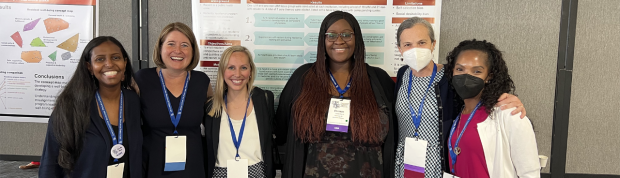
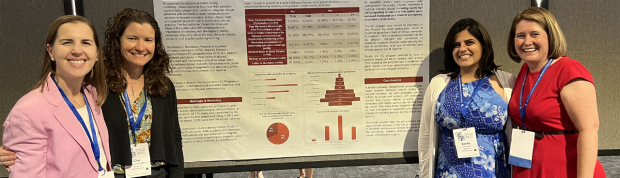
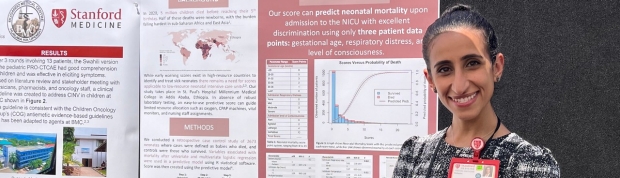
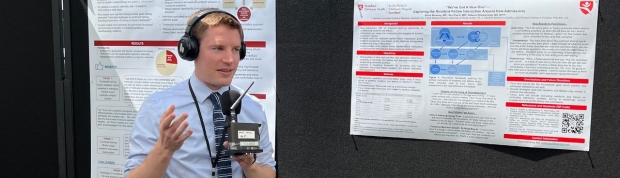
The goal of the Stanford Pediatric Residency Program is to develop leaders in pediatrics. We believe that in-depth training and experiential learning through completion of a scholarly project empowers our residents to approach medicine in a scholarly way and see how to incorporate scholarship into their careers to improve children’s health.
The Scholarly Concentrations were created in 2009 to give residents formalized training and personalized mentorship in one of six scholarly areas:
- Basic Science
- Clinical Research
- Community Engagement and Advocacy (StAT program)
- Medical Education
- Quality and Performance Improvement
- Global Health
The Scholarly Concentration program forms a unique and valuable component of the residency experience. Our Scholarly Concentration Leaders and faculty mentors are committed to creating intellectually stimulating and supportive environments that encourage and foster the development of individual passions and interests.
- All residents are expected to:
- Ask a scholarly question
- Select a research mentor
- Determine the appropriate methods for answering their question
- Carry out their scholarly project
- Disseminate their work in oral and written form
- Ask a scholarly question
Program Goals and Objectives
- The Scholarly Concentrations Program is a residency requirement to encourage all residents to:
- Experience a fundamental category of scholarship: discovery, integration, application, and/or teaching. This acknowledges the value of a broad view of scholarship, and recognizes that creating, transforming, and extending new knowledge are all valuable tenets of the academic medical experience.
- Gain a deeper understanding about the process of inquiry.
- Consider how continued scholarly work could fit into their long-term career goals.
- Experience a fundamental category of scholarship: discovery, integration, application, and/or teaching. This acknowledges the value of a broad view of scholarship, and recognizes that creating, transforming, and extending new knowledge are all valuable tenets of the academic medical experience.
- Completion of the Scholarly Concentration Program will allow all residents to:
- Define and outline standards of excellence for scholarship.
- Design a research project that is realistic and specific, with a clearly articulated research question and goals.
- Master basic technical research skills (e.g., determine the appropriate methodological approach and statistical analysis required; follow methods and procedures; collect data and conduct analysis).
- Analyze the significance and contribution of the results obtained to their field of study.
- Demonstrate professionalism in a research environment by being ethical in decision-making and adhering to IRB protocol.
- Demonstrate strong written and oral communication skills through dissemination of their research in local, regional and/or national forums.
- Reflect on lessons learned and consider ways to incorporate scholarship into their future careers.
- Define and outline standards of excellence for scholarship.









 Srinivas.jpg)
Timeline
Residents are introduced to our six scholarly concentration areas at the end of their intern summer, learn more about the scholarly concentrations in the fall, and choose a scholarly concentration in the winter of their intern year. During their PGY-2 year (if not earlier), residents choose a mentor, who supports them in the process of developing a scholarly question and determining methods for answering that question. Residents are provided with training in IRB (Institutional Review Board) protocols and are supported in the process of obtaining approvals (if needed). By the end of their PGY-2 year, all residents are expected to have begun data collection. During their PGY-3 year, residents complete data collection, analyze their data, and present their findings as a poster or platform presentation during our Research Day or other forum. Each year we award Excellence in Scholarship awards to residents who have demonstrated outstanding achievements on their scholarly projects.
Residents are required to present their project at the annual Stanford Peds Research Day. You may choose to present in any year, though most residents present in spring of their senior year. Submission to a national platform is encouraged but not required.
- Intern Year
- December 1: Deadline to apply to SC area of interest
- By December 15th: Receive notification of SC
- February 1: Submit schedule requests
- By June 1st: Complete CITI training in preparation for IRB submission
- PGY-2 By December 1st: Apply for Research Grant (optional)
- Choose project by December 1st: Submit Project Proposal
- PGY-3 Present at Peds Research Day (April)
- Completion of project by May
Combined residents, please click here for more information

Requirements
Curriculum
The Scholarly Concentrations Program requires all residents to participate in core block rotations and 7 half-day research retreats throughout their residency training to learn skills in research design and dissemination. In addition, some Scholarly Concentrations have quarterly evening sessions to meet the specific needs of the residents in their concentration. Scholarly concentration sessions allow residents to share their work with their SC Leaders and colleagues, discuss challenges and brainstorm solutions to their projects, and explore ways to integrate their work into their day-to-day clinical lives and long-term career plans.
Research Project
All residents are required to disseminate their work orally and in written format by presenting a poster at the Annual Department of Pediatrics Research Retreat by their graduating year. Submission of work to regional, national or international forums is strongly encouraged, but is not required.
| Oral Options | Written Options |
|
|
Contact Information

For questions about the program, please contact:
Clea Sarnquist, DrPH, MPH
Program Director, Scholarly Concentrations Program
Email Clea
Rasika Behl, MPH
Associate Program Director, Scholarly Concentrations Program
Email Rasika
Faculty Roles
The Scholarly Concentration Leaders provide overarching mentorship, support and opportunities for additional skills development throughout residency. The Scholarly Project Mentors take primary responsibility for helping the resident develop his/her project and assure its feasibility and integrity. They also serve as a source of support when oral and written presentations are given inside and outside the University.
Resources
We are committed to promoting excellence in scholarship in a supportive academic environment. Our dedicated Scholarly Concentration Leaders, Faculty Mentors and Residency Program Leadership Team help us achieve this goal through teaching and mentoring activities that promote knowledge and skill development, and facilitate personal awareness and reflection on individual strengths and areas for improvement.
In addition to mentorship from our outstanding faculty and staff, we provide many tools to help residents with the design, implementation and dissemination of their scholarly projects. These can be found on our research resources page.
Stanford University is committed to supporting residents and faculty in their efforts to conduct research of the highest quality. The Lane Medical Library, Research Management Group, and SPECTRUM offer in-person and online training sessions to support the development of essential skills in research.
Dissemination
- Blankenburg R., Bogetz A., Bruce J., Cohen H., Destino L., Frankovich J., Kache S., Kang J., Platchek T., Rabinovitch M., Rassbach C., Shaw G., Stuart E., Talib A., Chamberlain L. Scholarly Concentrations: Developing Residents' Skills in Scholarship Through Structured, Experiential Learning. Poster presented at Pediatric Academic Societies (PAS) Conference, San Diego, CA, 2015.
- Bogetz A., Blankenburg R. Individualized curricula: Scholarly Concentrations. Invited presentation, Resident Special Interest Group, Pediatric Academic Societies (PAS) Annual Conference, San Diego, CA, 2015.
- Bogetz A., Stuart E., Rassbach, C., Blankenburg R. Outcomes of a Longitudinal Scholarly Concentration in Medical Education. Oral presentation, Association of Pediatric Program Directors (APPD) Annual Conference, Orlando, FL, 2015.
- Srinivas N., Tchou M., Platchek T., Bogetz A., Blankenburg R., Destino L. Outcomes from an Advanced Course in Quality Improvement and Performance Improvement. Oral presentation at Association of Pediatric Program Directors (APPD) Conference, Orlando, FL, 2015.
- Bogetz A., Chamberlain L., Bruce J., Cohen H., Destino L., Frankovich J., Kache S., Kang J., Platchek T., Rabinovitch M., Rassbach C., Shaw G., Srinivas N., Stuart E., Talib A., Blankenburg, R. Promoting Pediatric Residents’ Scholarly Productivity Through a Formal Scholarly Concentration Program. Poster presented at Pediatric Academic Societies (PAS) National Conference, Baltimore, MD, 2016.
- Bogetz A., Abramson E., Winn A., Kuo A., Kuzminksi J., Louden T., Kache, S., Rassbach C., Gribben V., Peterson J., Blankenburg R. Building Scholarly Concentrations in Your Program: Developing Innovative Curricula in Advocacy, Global Health, Medical Education and Quality and Performance Improvement. Workshop presented at Association of Pediatric Program Directors (APPD) Conference, New Orleans, LA, 2016.
- Bogetz A., Chamberlain C., Abramson E., Winn A., Bruce J., Destino L, Gribben V., Kache S., Louden T., Peterson J., Rassbach C., Blankenburg R. Research During Residency: What Does It Take to Implement a Scholarly Concentration Curriculum at Your Institution? Workshop presented at Pediatric Academic Societies (PAS) Conference, Baltimore, MD, 2016.