Clinical Research

Clinical Trials
Offering pulmonary vascular disease patients the latest in diagnostics, prevention, and treatment is at the forefront of the Vera Moulton Wall Center's mission. In addition to access to the latest large scale pharmaceutical trials, the Center is also conducting a number of smaller Stanford initiated trials. These trials, which are only available at Stanford, have been developed by Stanford researchers and are bringing the latest discoveries out of the laboratory and to the bedside.
The Center has anywhere from 5-10 studies actively recruiting patients most of the time. Studies range from investigating the safety and efficacy of new medications and evaluating combination therapies of FDA approved therapies to participating in database and biobanking projects.
Active PH Trials at Stanford
Advance Outcomes
Brief Summary: Study ROR-PH-301, ADVANCE OUTCOMES, is designed to assess the efficacy and safety of ralinepag when added to pulmonary arterial hypertension (PAH) standard of care or PAH-specific background therapy in subjects with World Health Organization (WHO) Group 1 PAH.
Principal Investigator: Roham Zamanian, MD, FCCP
Stanford Study Status: Enrolling by invitation
GB002 in Adult Subjects With Pulmonary Arterial Hypertension (PAH)
Brief Summary: The primary objective for this trial is to determine the effect of GB002 (seralutinib) on improving pulmonary hemodynamics in subjects with World Health Organization (WHO) Group 1 PAH who are Functional Class (FC) II and III. The secondary objective for this trial is to determine the effect of GB002 (seralutinib) on improving exercise capacity in this population.
Principal Investigator: Roham Zamanian, MD, FCCP
Stanford Study Status: Recruiting
Open-label Extension Study of GB002 in Adult Subjects With Pulmonary Arterial Hypertension (PAH)
Brief Summary: This open-label extension study will evaluate the long-term effects of GB002 (seralutinib) in subjects who previously participated in a GB002 PAH study.
Principal Investigator: Roham Zamanian, MD, FCCP
Stanford Study Status: Recruiting
Pulmonary Hypertension Association Registry (PHAR)
Brief Summary: The PHA Registry (PHAR) is a national study about people who have pulmonary arterial hypertension (PAH) and chronic thromboembolic pulmonary hypertension (CTEPH). PHAR collects information from people with PAH and CTEPH who are cared for in participating PHA-accredited Pulmonary Hypertension Care Centers throughout the U.S.
Principal Investigator: Roham Zamanian, MD, FCCP
Stanford Study Status: Recruiting
Advance Extension
Brief Summary: Study ROR-PH-303, ADVANCE EXTENSION, is an open-label extension (OLE) study for participants with WHO Group 1 PAH who have participated in another Phase 2 or Phase 3 study of ralinepag.
Principal Investigator: Roham Zamanian, MD, FCCP
Stanford Study Status: Enrolling by invitation
Open-Label Rollover Study of Levosimendan in PH-HFpEF Patients
Brief Summary: PH-HFpEF patients will receive weekly open-label doses of levosimendan and be periodically evaluated for safety and effectiveness in extended use.
Principal Investigator: Roham Zamanian, MD, FCCP
Stanford Study Status: Active, not recruiting
Pulmonary Hypertension and Anastrozole Trial (PHANTOM)
Brief summary: The primary objectives of this study are to determine whether the study drug, anastrozole may improve six minute walk distance at six months compared to placebo and to assess safety and side effects up to twelve months in pulmonary arterial hypertension (PAH).
Principal Investigator: Roham Zamanian, MD, FCCP
Stanford Study Status: Active, not recruiting
A Study of Sotatercept for the Treatment of Pulmonary Arterial Hypertension (STELLAR)
Brief Summary: The objectives of this study are to evaluate the efficacy and safety of sotatercept treatment (plus background PAH therapy) versus placebo (plus background PAH therapy) at 24 weeks in adults with PAH.
Principal Investigator: Roham Zamanian, MD, FCCP
Stanford Study Status: Active, not recruiting
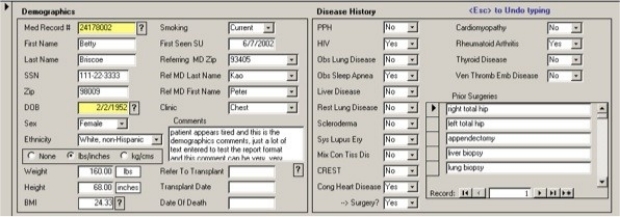
PH Patient Database Project
The Vera Moulton Wall Center has one of the largest academic pulmonary hypertension databases in the world. Developed almost 20 years ago it has served as the model for other large scale PH databases. In addition to standard demographic data, the database tracks patient visits, admissions, and more than 200 other data points from various tests and lab studies. Stanford PH patients simply need to sign an informed consent and agree to participate, no other visits or tests are needed beyond routine patient care.
This aggregate data allows researchers to look at the 'bigger picture' and look for trends and patterns among larger PH populations and also much smaller, very specific groups to better understand patterns and trends across groups of PH patients.
Stanford PH Biobank
Contact Us
To be considered for one of our trials please contact us to see if you are eligible.
Our studies include a wide range of patients, representing a diverse group of ages (including pediatrics), ethnicities and socioeconomic backgrounds. To learn about current trials or to be considered for future trials please contact us by email.