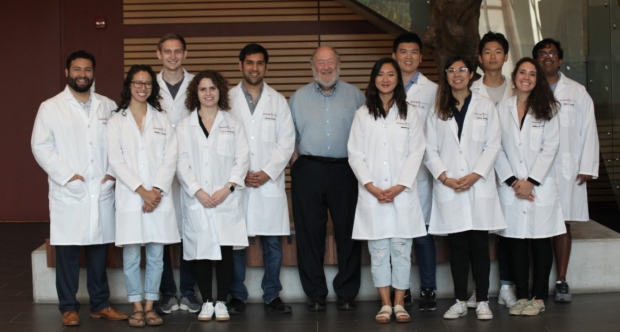
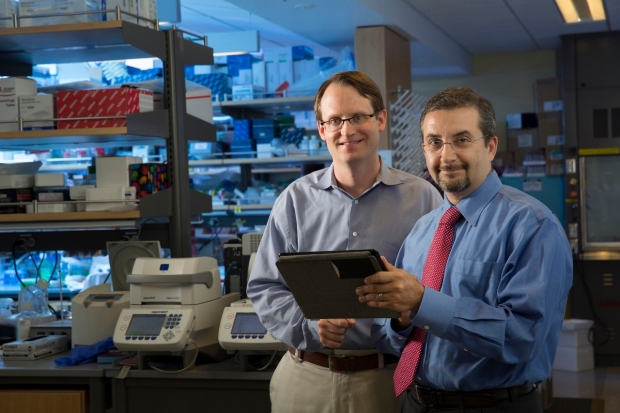
Chuck Chan, stem cell researcher who discovered how to regrow cartilage, dies at 48
The Stanford Medicine researcher was known for his groundbreaking work and his generous spirit as a mentor and colleague.
How music gives aspiring physician-scientist a proper life rhythm
Quenton Rashawn Bubb continues to value the complex, complementary nature of work on parallel paths -- not just as a musician/academic, but now on the path to his career.
and Regenerative Medicine
A twist on developmental regulation of the face
During development, transcription factors are important in unlocking genes and making them available to cellular machinery. Joanna Wysocka and her colleagues found a novel sequence that allows coordination between different transcription factors during the development of the face.
Hodgkin lymphoma prognosis, biology tracked with circulating tumor DNA
Circulating tumor DNA predicts recurrence and splits disease into two subgroups in Stanford Medicine-led study of Hodgkin lymphoma. New drug targets or changes in treatments may reduce toxicity.
and Regenerative Medicine
Why does CHIP lead to cardiovascular disease? The answers are becoming clearer
Stem cell mutations that lead to dominant clones raise the risk of cardiovascular disease. The mechanisms of this increased risk may like in the promotion of inflammatory activities among the offspring of mutant stem cells.
Blood condition linked to protection against Alzheimer's
Researchers at Stanford Medicine explore a potentially causative connection between a blood disorder called CHP and Alzheimer's disease..
and Regenerative Medicine
Growing new blood vessels when arteries are blocked
Institute researchers have discovered that certain purified stem cell components of normal fat, when combined in the right proportions and transplanted into the body, will grow into new blood vessels. The researchers showed that when the technique was used in mice it restored blood flow to areas where areas where arteries were blocked
and Regenerative Medicine
Researchers expand human blood stem cells in culture
For decades, researchers have been trying to expand human blood stem cells in culture. Researchers at the institute have recently accomplished this, opening the way to explore many new medical therapies and avenues of basic research.
and Regenerative Medicine
Omair Khan named Soros Fellow
Stem Cell MD/PhD Student Omair Khan became one of 23 graduate students nationally to be awarded a 2023 Paul and Daisy Soros Fellowship for New Americans.
and Regenerative Medicine
Researchers invent way to purify developing human brain cells
Researchers created a method of isolating and studying different human neural stem and progenitor cells. Transplanting these pure cells back into mice allows them to study the whole tree of all developing human brain cells.