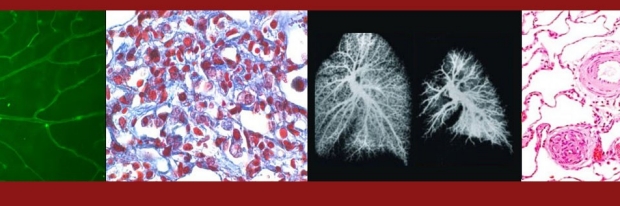
Our lab focuses on understanding the genetic, cellular and molecular mechanisms involved in the pathogenesis of pulmonary arterial hypertension (PAH). We are interested in understanding how pulmonary arteries respond to injury and identify novel genetic modifiers whose dysfunction can trigger small vessel loss and vascular remodeling in PAH patients. In particular, we are currently focused on exploring how the Wnt signaling pathways regulate the behavior of pulmonary artery endothelial cells (PAECs), smooth muscle cells (PASMCs) and pericytes in response to injury and whether mutations related to these pathway can affect signaling via other pathways relevant to PAH resulting in development of clinical disease. The overarching goal of our work is to identify potential biomarkers and drug targets that can be used in the development of novel diagnostic and treatment approaches to offer patients afflicted with this devastating disease.
In recent years, our lab has broadened its research interests to include other rare pulmonary diseases such as idiopathic lung fibrosis and lymphangioleiomyomatosis (LAM). We are testing novel approaches to prevent and reverse disease progression in animal models of these diseases with the goal of discovering novel therapies to alter the natural course of these life-threatening diseases.