Current Trainees
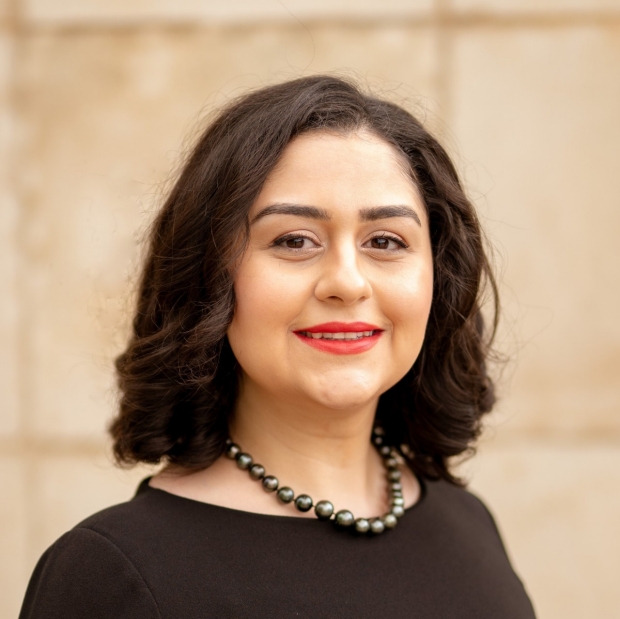
Golnaz Moallem, PhD
Mentor: Mirabela Rusu, PhD and Bruce Daniel, MD
(9/1/2022 - 8/31/2023)
Golnaz Moallem is a postdoctoral research fellow at the Personalized Integrative Medicine Laboratory in the Department of Radiology at Stanford University. Her research interests include machine learning and computer vision applications in clinical data analysis, particularly the design and development of deep vision systems for medical image analysis including image classification and object recognition. She completed her B.S. degree in electrical engineering from Isfahan University of Technology, and her M.S. and Ph.D. degrees in Electrical Engineering from Texas Tech University. During her Ph.D. studies, she developed fast and effective CNN-based deep vision systems for image classification and object detection in two projects focusing on wildlife monitoring and cancer cell characterization. As a SCIT Fellow, she will work with Drs. Mirabela Rusu and Bruce Daniel towards performing radiology-pathology fusion for developing a deep learning framework that predicts treatment response based on pre-treatment MRI scans in breast cancer patients.
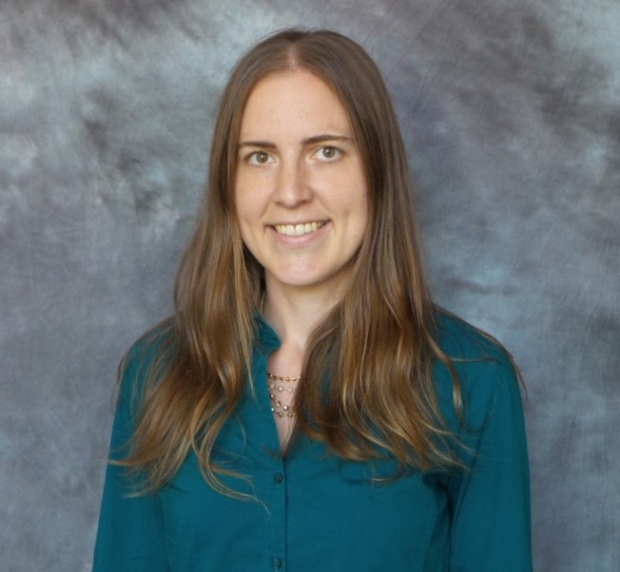
Sara Saunders, PhD
Mentors: Mirabela Rusu, PhD; Richard Fan, MD; Geoffrey Sonn, MD
(9/1/2022 - 8/31/2023)
Sara is a postdoctoral fellow in the department of Urology dedicated to tackling challenges in medical imaging research that must be addressed prior to translation into clinical practice. Currently she researches prostate cancer detection on MRI. As a SCIT fellow, she collaborates with Drs. Fan and Sonn in the Department of Urology and Drs. Rusu and Iagaru in the Department of Radiology. Prior to joining this team at Stanford, she earned a PhD in Biomedical Engineering with a minor in Computer Science from the University of Minnesota, where her research focused on clinical studies investigating both prostate cancer and liver disease. Additionally, she received a Masters in Engineering from Dartmouth. Before pursuing graduate studies, Sara studied Mathematics and Nursing at the University of Wisconsin and worked as a Registered Nurse at Mayo Clinic. Her current research focuses on improving accuracy of prostate cancer detection on MRI with deep learning methods and generalizing these techniques to multi-vendor data.
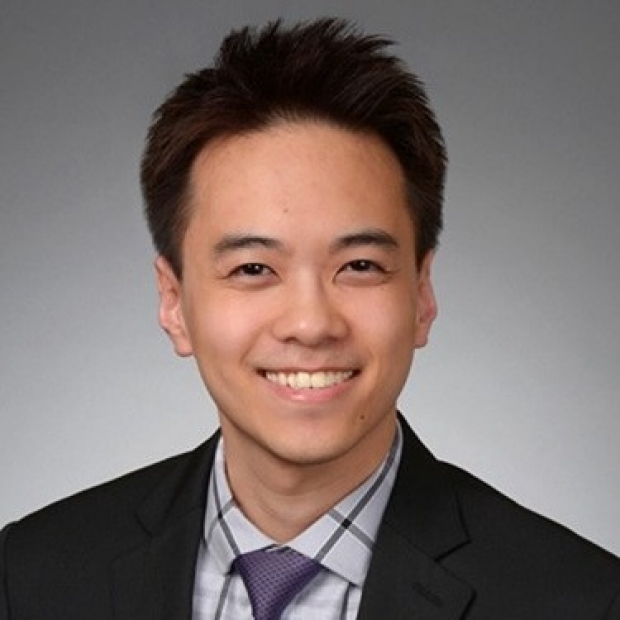
Hsiang-Hua (Andy) Hung, MD
Mentors: Sharon Pitteri, PhD; Joseph DeSimone, PhD, Adam de la Zerda, PhD, Steven Poplack, MD
(7/1/2022 - 6/30/2024)
Andy is a radiology fellow who believes in advancing preventive health and early cancer detection with molecular markers and imaging. He earned his B.A.Sc. in Engineering Science from the University of Toronto (2006), M.A.Sc. in Biomedical Engineering from the University of Toronto (2008), and M.D. (2017) and Ph.D. in Biomedical Engineering (2014) from Northwestern University. He completed residency in diagnostic radiology and nuclear medicine at Stanford Health Care (2022). Previously, Andy worked on biomaterial wound dressings at Defence R&D Canada, studied quantum dot-based cancer imaging probes targeted at matrix metalloprotease-7 under Dr. Warren Chan and Dr. Gang Zheng, and developed gadolinium-carbon nanomaterials and a multiparametric technique for MR molecular imaging under Dr. Thomas Meade. As a SCIT fellow, Andy is working under his mentors to develop microneedle technology to sample breast interstitial fluid biomarkers to improve the accuracy of breast cancer screening and optical coherence tomography histology to decrease the positive margin rate in lumpectomy for breast cancer.
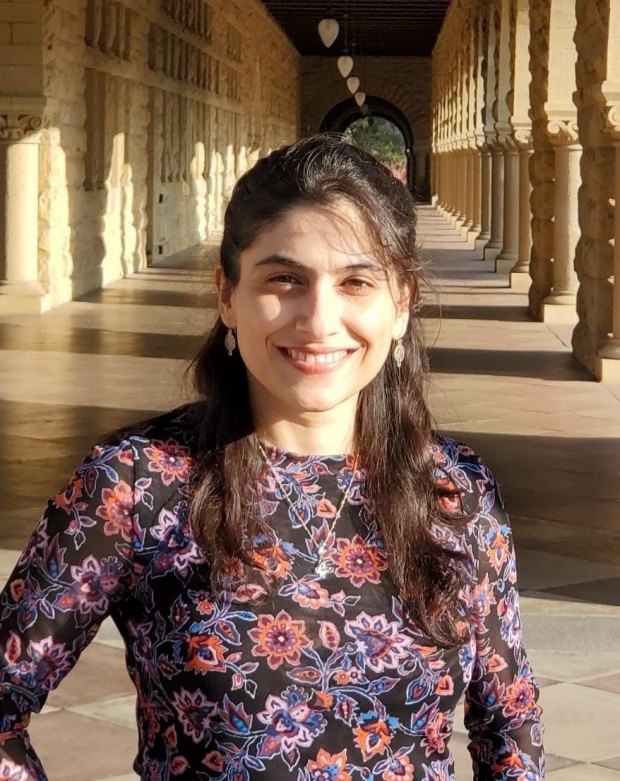
Shirin Pourashraf, PhD
Mentors: Craig Levin, PhD and Andrei Iagaru, MD
(2/1/2022 - 1/31/2024)
Shirin Pourashraf is a Postdoctoral Fellow Scholar in the Department of Radiology, Molecular Imaging Instrumentation Laboratory (MIIL). She is passionate about exploring novel methods for designing and developing low noise high performance circuit boards and front-end electronics for biomedical instrumentations and medical systems. Shirin received her Ph.D. (2018) in Electrical Engineering/Low Power Analog and Mixed-Signal Integrated Circuits (IC) Design from New Mexico State University. She earned her M.S. (2011) in Microelectronics at the Department of Electrical and Computer Engineering, Isfahan University of Technology, Iran and a B.S. (2007) in Electrical Engineering from Shahid Chamran University of Ahvaz, Iran. As a SCIT fellow, Shirin works with Drs. Andrei Iagaru and Craig Levin towards building a 100 ps FWHM coincidence time resolution pre-clinical partial ring time-of-flight positron emission tomography (TOF-PET) scanner with 3D event positioning capability enabling further advancement of TOF-PET’s ability to visualize and quantify cancer lesions or alternately to reduce scan time or dose injected into the patient.