CRISPRi/a Toolbox for Genome Regulation

We have developed a toolkit of CRISPRi/a tools from various species of bacteria CRISPR systems. The toolkit allows efficient sequence-specific activation or repression of gene expression in different organisms (bacteria, yeast, mammalian cells). We also developed the CRISPR for tracking chromatin dynamics in living mammalian cells. Please click on each topic for more details.
We have engineered the bacterial immune CRISPR (Clustered Regularly Interspaced Short Palindromic Repeats) system as a platform for RNA-guided genes in bacteria, yeast, and human cells. This CRISPR interfering (CRISPRi) method works independently of host cellular machines, requiring only a nuclease-deactivated Cas9 (dCas9) protein and a customized single guide (sg) RNA designed with a ~20-basepair complementary region to any gene of interest. Co-expression of dCas9 and sgRNA can efficiently block transcription (in bacteria, ~ 300-fold repression) by interfering with transcriptional elongation, RNA polymerase binding, or transcription factor binding.
The binding specificity is determined jointly by a 20-bp matching region on the sgRNA and a short DNA motif (protospacer adjacent motif, or PAM, sequence: NRG, R = G or A) juxtaposed to the DNA complementary region. The uniqueness of CRISPRi, as compared to several recently published works on using the wild-type CRISPR system for genome editing, is that the nuclease-deficient dCas9 mutant could silence transcription of the target gene expression without genetically altering the target sequence. Thus, CRISPRi is a system that can regulate a genome instead of modifying it.
More details about the CRISPRi technology can be found on wikipedia.


dCas9-based CRISPRi/a sgRNA design tool

We have created a designer tool for genome editing, repression, and activation, named CRISPR-ERA (E = editing, R = repression, A = activation). The tool allows the generation of sgRNAs for gene activation or repression using our pre-assembled databases of CRISPR for transcriptional repression or activation in different organisms. Currently, nine organisms, including two bacterial species E.coli, B. subtilis; yeast S. cerevasiae; C. elegans, fruit fly, zebrafish, mouse, rat, and human databases, are included. It also enables automated genome-wide sgRNA design.
CasMINI guide RNA design tool
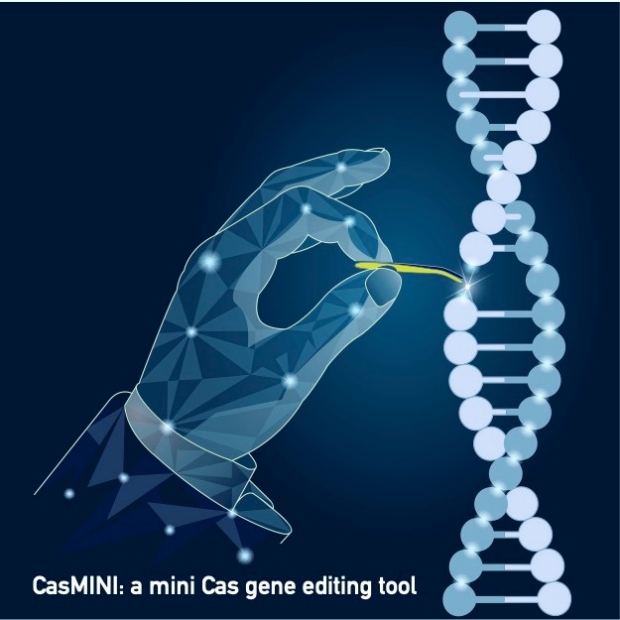
To simplify and accelerate usage of dCasMINI, one of the smallest known dCas proteins capable of efficient gene regulation in mammalian cells (Xu et al., 2021), we have created an online guide design tool to identify optimal spacer sequences for transcriptional suppression (CRISPRi) and transcriptional activation (CRISPRa) in human cells (Lopp* & Yeo* et al., 2023). The tool uses sensitive alignment to comprehensively identify genome-wide off-targets and ranks spacer sequences accordingly.
Frugal CRISPR Kits for High School Students
CRISPR technologies have a monumental impact on the biological sciences, enabling groundbreaking treatments for genetic diseases and cancer. But hands-on experience with the technology has been limited in the high school curricula due to extensive resource requirements for carrying out CRISPR experiments. The inspiration for a frugal CRISPR kit arose from a profound realization of the need for affordable and equitable access to hands-on educational experiences with CRISPR experiments.
In the current CRISPR experiment setup, researchers need to invest in expensive laboratory equipment, often costing tens of thousands of dollars. Furthermore, they need to address biosafety requirements for working with cells and biohazards and follow a relatively complex experimental protocol. These barriers are insurmountable for most high schools, leaving most K–12 students with minimal hands-on experience with CRISPR technology until university.
We have developed a safe, frugal, and accessible CRISPR kit with no equipment requirement to offer hands-on experience in CRISPR experiments (Collins & Lau et al., 2023). The CRISPR kit also minimizes biosafety concerns and utilizes affordable materials. Since many high school students have access to smartphones, they just need a smartphone to measure and quantify the CRISPR activity using the kit. It is scalable to most high school curricula in a low-resource setting and facilitates accessible education on cutting-edge gene-editing technology.
The CRISPR kit was invented by undergraduate students, Matthew Lau and Marvin Collins, at Stanford University in Stanley Qi‘s laboratory.