Research Overview
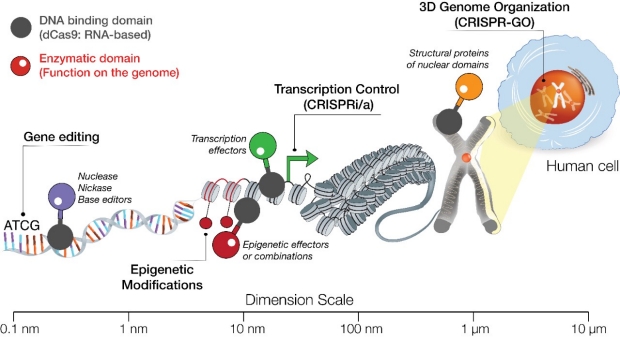
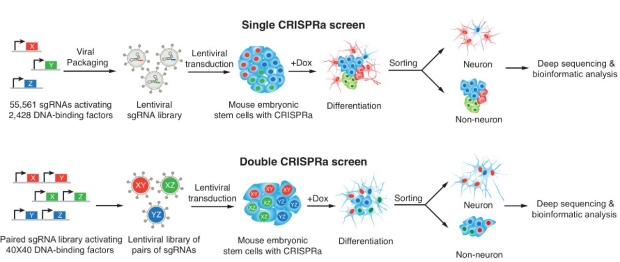
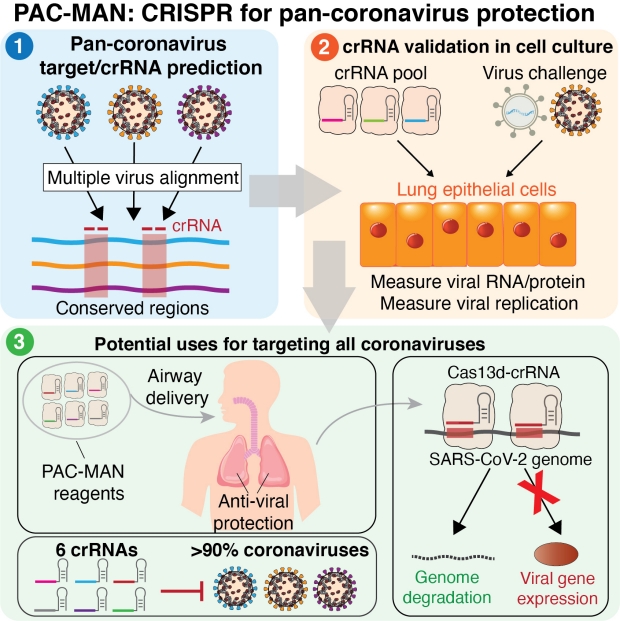
We develop biotechnologies for genome engineering and synthetic biology to flexibly program and manipulate the genomic codes of life. To expand our bioengineering toolbox and to understand the function of the genome in development and disease, we developed a suite of CRISPR tools, including the nuclease-deactivated dCas molecules from the natural CRISPR-Cas system for transcription activation or repression (CRISPRi/a), live-cell genome imaging (LiveFISH), and manipulating the spatial genome organization (CRISPR-GO). We appreciate the vast macromolecules (DNA, RNA, and proteins) that have been evolved throughout billions of years of history and aim to harness these naturally occurring molecules as tools. We appreciate the power of directed evolution to obtain novel molecules that have been discovered or evolved in nature. Topics that are particularly interesting to us:


The ideal genomic tools are those that can control any gene in any cell type for any mode of regulation (transcription, translation, epigenetics, spatial, temporal, multiplexed, quantitative, inducible, and conditional). Examples include:
· dCas9: Development of the first nuclease-dead dCas9 molecule for gene expression regulation (Qi Cell 2013)
· CRISPRi and CRISPRa: Development of CRISPRi and CRISPRa in eukeryotic cells, including mammalian and human cells (Gilbert Cell 2013)
· Multiplexed CRISPRi/a: Development of CRISPR-mediated systems by recruiting RNA aptamer-engineered guide RNAs for multiplexed gene regulation (Zalatan Cell 2015; Gao Nat Method 2016)
· GPCR-modulated genome editing: Coupling CRISPR to signal detection of broad antigens and ligands by GPCR or promoters (Kipniss Nat Comm 2017; Kempton Mol Cell 2020)
· Live-cell imaging and LiveFISH: imaging of genome dynamics in cells (Chen Cell 2013; Wang Science 2019)
· CRISPR-GO: manipulating the 3D genome structure within the nucleus (Wang Cell 2018)
· CasMINI: Miniaturized CRISPR molecule for genome and epigenome editing (Xu Mol Cell 2021). For guide RNA design, go to here: https://www.casmini-tool.com/
· HyperCas12a: An engineered hyper-efficient Cas12a for multiplexed gene modulation or editing in vivo (e.g., mouse) (Guo Nature Cell Biology 2022)