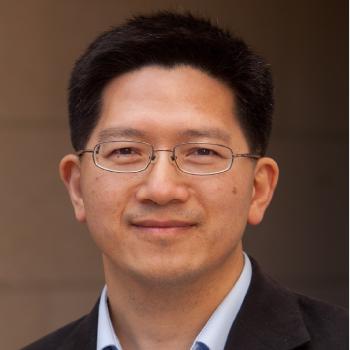
Bio
Dr. Wang is the Leland T. Edwards Professor in the School of Engineering and Professor of Materials Science and Engineering, jointly of Electrical Engineering and, by courtesy, of Radiology (Molecular Imaging Program at Stanford). He directs the Center for Magnetic Nanotechnology and is a leading expert in biosensors, information storage and spintronics. His research and inventions span across a variety of areas including magnetic biochips, in vitro diagnostics, cancer biomarkers, magnetic nanoparticles, magnetic sensors, magnetoresistive random access memory, and magnetic integrated inductors. He has over 300 publications, and holds 70 issued or pending patents in these and interdisciplinary areas. He was named an inaugural Fred Terman Fellow, and was elected a Fellow of the Institute of Electrical and Electronics Engineers (IEEE), a Fellow of American Physical Society (APS) and a Fellow of National Academy of Inventors (FNAI) for his seminal contributions to magnetic materials, nanosensors and cancer diagnostics. His team won the Grand Challenge Exploration Award from Gates Foundation (2010), the XCHALLENGE Distinguished Award (2014), and the Bold Epic Innovator Award from the XPRIZE Foundation (2017). He coauthored two textbooks: Magnetic Information Storage Technology (Academic Press) and Biochips and Medical Imaging (Wiley).
Dr. Wang cofounded six high-tech startups in Silicon Valley, including Curve Biosciences, Magic Lifescience, MagArray, and Nvigen.In 2023, Curve Biosciences demonstrated a circulating tumor DNA NGS assay, enabling early detection of liver cancer from cirrhosis with unprecedented sensitivity and specificity (both ≥95%); Magic received a Gates Foundation grant and launched clinical trials to seek FDA clearance for its rapid NAT products at POC. In 2018 MagArray launched a first of its kind lung cancer early diagnostic assay based on protein cancer biomarkers and support vector machine (SVM). Through his participation and leadership in Cancer Nanotechnology Excellence, Semiconductor Research Corp (SRC) and Microelectronics Commons, he is actively engaged in the transformative R&D of healthcare, energy-efficient computing and edge AI.