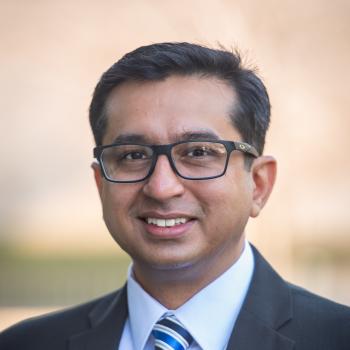
Bio
Dr. Nazish Sayed, MD, PhD, is an Associate Professor in the Division of Vascular Surgery, Department of Surgery, and The Stanford Cardiovascular Institute at Stanford University School of Medicine. He also serves as Director of the Baszucki Vascular Surgery Biobank. Dr. Sayed received his MD from the University of Mumbai, India, a PhD in Pharmacology and Physiology from Rutgers New Jersey Medical School, and a Master’s degree in Molecular Biology from Montclair State University. Following postdoctoral training in cardiovascular and regenerative medicine at Stanford University, he joined the Stanford faculty and established an independent research program focused on vascular biology, cardiovascular disease modeling, and regenerative medicine.
Dr. Sayed’s laboratory investigates how endothelial dysfunction contributes to cardiovascular disease and leverages human stem cell technologies to identify novel therapeutic strategies. His research integrates patient-derived induced pluripotent stem cells (iPSCs), engineered cardiac tissues, cardiac organoids, human biospecimens, genome engineering, spatial transcriptomics, and single-cell multi-omics to uncover mechanisms underlying inherited and acquired cardiovascular diseases.
A major focus of the laboratory is understanding endothelial–cardiomyocyte communication in cardiomyopathy. Using patient-specific iPSCs, human cardiac organoids, engineered heart tissues, and multi-omic approaches, his group studies how endothelial dysfunction drives myocardial fibrosis, inflammation, and heart failure. Current efforts include investigations into LMNA-related dilated cardiomyopathy, endothelial-to-mesenchymal transition (EndoMT), and mechanisms of fibrotic remodeling. The laboratory has also developed innovative human disease models to study cardiovascular complications associated with cancer therapies, including tyrosine kinase inhibitors and immune checkpoint inhibitors, leading to the identification of novel pathways involved in treatment-related cardiotoxicity.
Additional areas of research include cardiovascular aging, toxic environmental exposures, rare vascular diseases, and precision cardiovascular medicine. By combining human tissues, advanced stem cell models, artificial intelligence, and systems-level biology, the laboratory aims to accelerate the discovery of therapies that improve cardiovascular health and patient outcomes.
Dr. Sayed’s research has been supported by multiple NIH awards, including two NHLBI R01 grants and the prestigious NHLBI R35 Emerging Investigator Award, as well as funding from the American Heart Association Strategically Focused Research Network, the Department of Defense, the California Tobacco-Related Disease Research Program, and industry partnerships. His work has resulted in more than 95 peer-reviewed publications in leading journals, including Science Translational Medicine, European Heart Journal, Cell Stem Cell, Nature Aging, Nature Cardiovascular Research, Circulation, Cell, and The New England Journal of Medicine.
Dr. Sayed has received numerous honors, including the American Heart Association ATVB Young Investigator Award, the Jay D. Coffman Young Investigator Award from the Society of Vascular Medicine, and the Stanford Cardiovascular Institute Recognition Award. Through his research, mentorship, and collaborative leadership, he is committed to advancing precision cardiovascular medicine while fostering an inclusive and supportive environment for the next generation of scientists and physician-investigators.