News
 – Stanford Cancer Institute
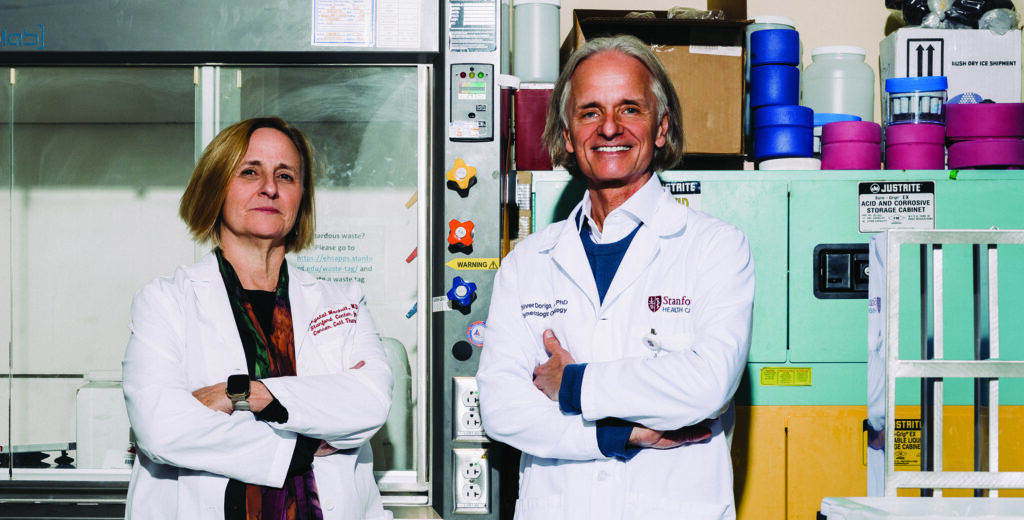
Harnessing nature to engineer stronger CAR-T cells
Taking inspiration from our own biology, Stanford scientists developed a creative solution to one of the biggest challenges CAR-T therapy faces in treating solid tumors.

Advancing Pediatric Cell and Gene Therapy Clinical Trials Workshop
On April 9th, The FDA’s Center for Biologics Evaluation and Research (CBER), Office of Therapeutic Products (OTP) and the Alliance for Regenerative Medicine (ARM) co-hosted a workshop titled “Advancing Pediatric Cell and Gene Therapy Clinical Trials: Scientific, Ethical, Regulatory and Practical Considerations.” The workshop explored the issues surrounding clinical trials for cell and gene therapies (CGTs) pediatric populations, particularly for diseases where earlier intervention may result in greater therapeutic benefit. This includes conditions that affect both pediatric and adult populations, as well as diseases that occur primarily in children.
 – Stanford Medicine Magazine
Hope on the horizon for difficult ovarian cancer cases
Trials of new approaches to CAR-T cell therapy offer promise for ovarian cancer patients who haven’t seen success with other treatments.
 – STAT
Sean Yamada-Hunter named STAT Wunderkind 2024
STAT celebrates the unheralded heroes of science and medicine, poring over hundreds of nominations from across North America in search for the next generation of scientific superstars.
 – Alliance for Cancer Gene Therapy
Alliance for Cancer Gene Therapy (ACGT) Awards Grant to Mackall Lab
ACGT has awarded a grant to Crystal Mackall to support the development of a remote-controllable CAR T-cell therapy for solid tumors.
 – Engineered CD47 protects T cells for enhanced antitumor immunity
Engineered CD47 protects T cells for enhanced antitumor immunity
SCI News highlights the recently published work by Sean Yamada-Hunter, Johanna Theruvath, and team illuminating the relationship between adoptively transferred T cells and macrophages and how two immunotherapies may work together to increase their tumor-fighting capabilities.
 – Stanford Cancer Institute
FOXO1 Controls CAR-T Cell Longevity
SCI News highlights recently published work from Crystal Mackall's lab at Stanford and Evan Weber's lab at the Children’s Hospital of Philadelphia (CHOP). Alexander Doan, Katherine Mueller, Andy Chen, and team identified a protein, FOXO1, that improves the survival and function of CAR-T cells, which may lead to more effective CAR-T cell therapies and could potentially expand its use in difficult-to-treat cancers.
 – Stanford Cancer Institute
CAR-T Cell Therapy in Solid Tumors
SCI News highlights two recently published papers from the Mackall lab: work by Tara Murty, Sneha Ramakrishna, and team on immune determinants of CAR-T cell therapy & work by Dorota Klysz and team on better nutrition for stronger CAR-T cells.
 – Stanford News
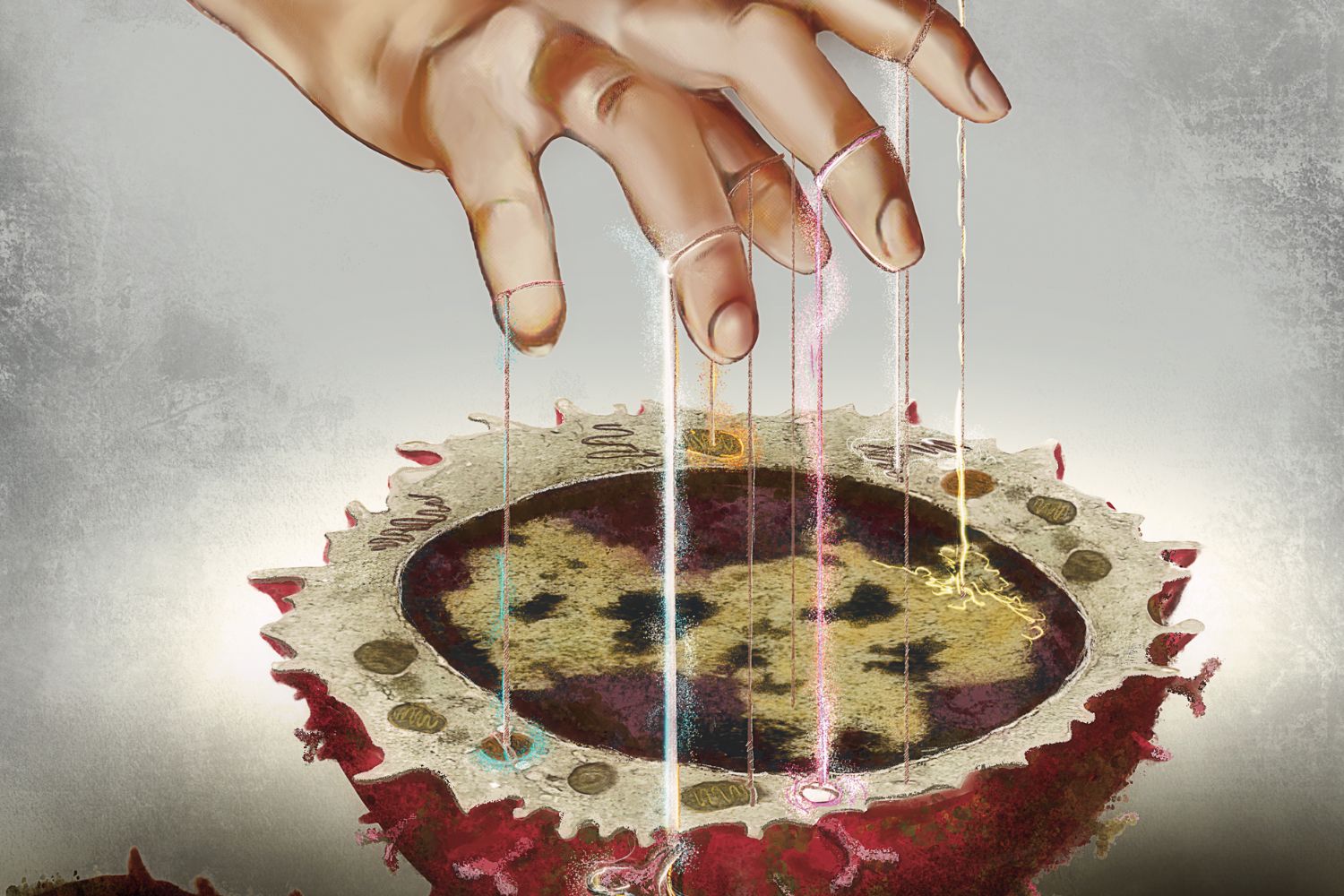
A new RNA editing tool could enhance cancer treatment
Stanford News highlights the work by Victor Tieu and team, which found that an RNA-targeting CRISPR platform could tune immune cell metabolism without permanent genetic changes, potentially unveiling a relatively low-risk way to upgrade existing cell therapies for cancer.
 – Nature News
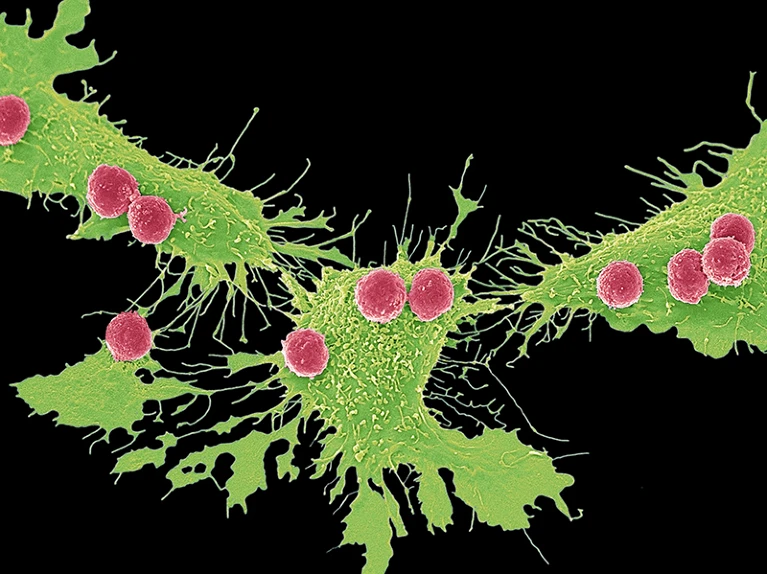
MEGA-CRISPR tool gives a power boost to cancer-fighting cells
Nature News highlights recently published work by Victor Tieu and team describing a system that edits RNA rather than DNA, which can give new life to exhausted CAR T cells.