News & Events
Stanford Hypertension Fellowship Program
Dr. Jehan Bahrainwala
Hypertension Fellowship Program Director
The Stanford Hypertension fellowship is a one-year program that provides comprehensive training to fellows who desire a sub-specialization in Hypertension.
Hypertension is a multifactorial disease, with consequences for multiple organ systems (cardiovascular disease, cerebrovascular disease, and chronic kidney disease, for example). At Stanford, we have modeled the Hypertension Center on a multi-disciplinary approach to this condition, and we have systematically involved members of multiple stake-holder departments/divisions from Stanford Health Care, in our didactic conferences. These include Cardiology, Endocrinology, Nephrology, Stroke Medicine, Neurology/Autonomic disorders, Sleep Medicine, Diagnostic and Interventional Radiology, and Vascular and Endocrine Surgery.
The educational experiences of the Hypertension Fellowship include a combination of core curriculum lectures, case conferences, grand rounds, and outpatient & inpatient rotations with interdisciplinary teams to allow a true, 360-degree approach to this condition.
Eligibility:
- The individual to be trained must be a citizen or a noncitizen national of the United States or have been lawfully admitted for permanent residence at the time of appointment.
- A minimum of an internal medicine or family medicine residency completion is required for participation in this fellowship.
- The individual to be training will be required to have a Physician’s and Surgeon’s California Medical License on their start date.
Compensation: The salary for this position is $102,276.80/year plus benefits. Learn more about the benefits Stanford offers here.
News
Dr. Tara Chang presents at Nephrology Grand Rounds
The 2025 AHA/ACC High Blood Pressure Guidelines: What's New?
Dr. Tara Chang delivered an insightful presentation at Nephrology Grand Rounds, focusing on the 2025 AHA/ACC High Blood Pressure Guidelines. Her talk highlighted the latest advancements and ongoing research in the field, emphasizing the potential for improved patient outcomes.
Dr. Susan Seav presents at Nephrology Grand Rounds
Diagnosing Pheochromocytoma: Searching for Zebras Among the Hoofbeats
Dr. Susan Seav delivered an insightful presentation at Nephrology Grand Rounds, focusing on Diagnosing Pheochromocytoma. Her talk highlighted the latest advancements and ongoing research in the field, emphasizing the potential for improved patient outcomes.
Dr. Tara Chang presents at Nephrology Grand Rounds
Renal Denervation: Where are we in 2025?
Dr. Tara Chang delivered an insightful presentation at Nephrology Grand Rounds, focusing on the status of renal denervation in the year 2025. Her talk highlighted the latest advancements and ongoing research in the field, emphasizing the potential for improved patient outcomes.
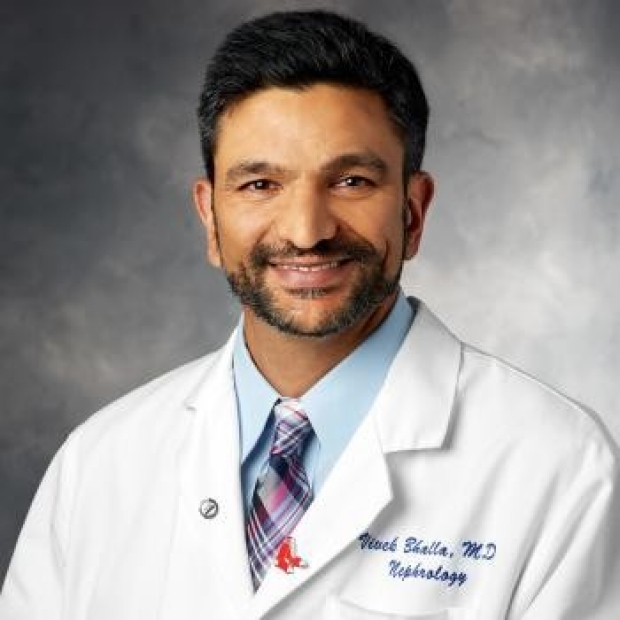
Dr. Vivek Bhalla Addresses Myths in Diagnosis of Primary Aldosteronism at World Congress of Nephrology
Dr. Bhalla was a speaker at the World Congress of Nephrology conference, the annual scientific, educational, and networking event for the International Society of Nephrology. During the session, he participated in a panel discussion addressing various myths and misconceptions related to diagnostic tests, including their indications, interpretation, and practical application in clinical settings. Alongside other global experts, Dr. Bhalla clarified these misconceptions and offered valuable guidance on the effective use of these testing modalities in clinical practice.
Marcia Garilli Awarded Ambulatory Care Services Nurse of the Year
I enjoy what I do, and I look forward to making more amazing things happen in our clinic
Join us in congraulating Maia Garilli in being awarded the Ambulatory Nurse of the Year Award for her leadership and for being a great model of the excellence in ambulatory care nursing.
Stanford Hypertension Center renews American Heart Association’s Comprehensive Hypertension Center Certification
The Stanford Hypertension Center has been awarded the American Heart Association’s Comprehensive Hypertension Center Certification, to recognize the practice’s commitment to following proven, research-based treatment guidelines to care for people with complex or difficult-to-treat hypertension, or high blood pressure.
Certified practices must be primarily devoted to patients with hypertension and related disorders, be recognized as referral and treatment resources for resistant and secondary hypertension and have facilities and personnel capable of assessing and evaluating complicated hypertension problems. Certified Comprehensive Hypertension Centers are recognized as leaders in providing the most up-to-date effective treatment strategies based on current evidence-based research in hypertension.
The Stanford Hypertension Center underwent several reviews by American Heart Association quality improvement specialists who evaluated the practice’s policies, procedures and operations to ensure appropriate diagnosis, evaluation and treatment protocols were in place and executed for hypertension patients.
Key areas in which the Stanford Hypertension Center, supported by Stanford Health Care, demonstrates a commitment to adherence to certification required treatment standards include:
Protocol-driven care including:
- Automated oscillometric blood pressure
- BP cuff calibration
- Diagnostic testing for secondary causes of hypertension
- Provider certification for excellence in hypertension care
- Multidisciplinary experience with diagnosis and treatment
- Involvement in clinical trials related to hypertension
We provide innovative care for this familiar condition that afflicts almost half the adults in the nation and our regional experience is no different. Our mission since we opened our doors in 2015, is to provide comprehensive, high-quality, care for patients with severe or refractory hypertension, including evaluation for secondary and reversible forms of hypertension. We welcome referrals from Stanford and its surrounding clinics, our regional community, and beyond.
Through this certification program, the American Heart Association aims to improve the outcomes of people with complex or difficult-to-treat hypertension by collaborating with medical practices to implement evidence-based treatment guidelines.
The overall goals for the certified Comprehensive Hypertension Center encompass patients, providers and research and training opportunities through an evaluation of the practice against a professional set of criteria based on demonstrated adherence to key standards and rigorous review process.
For more information on the American Heart Association certification programs, visit: www.heart.org/certification.
Featured Articles and News
RNA Interference as a Therapeutic Approach for Managing Hypertension
More than one billion people worldwide have hypertension—a major risk factor for cardiovascular and kidney disease...
of Medicine
Tackling a Fundamental Disease: Multiple Disciplines Take on Hypertension
A multidisciplinary clinic at Stanford is redefining what it means to live with hypertension.