Global Child Health Research
Polio. Arboviruses. Newborn health. Gender-based violence. Our group is actively investigating questions about how to reduce the burden of disease and improve the health of children around the world. Our research also includes parasites, child nutrition and development, educational interventions, and novel diagnostics.
While our work ranges from laboratory work exploring the efficacy of measles vaccines in Mexico to community-based interventions to reduce gender-based violence in Kenya, our unifying goal is to improve the health of underserved children in low-resource settings.
Faculty Research Highlights
COVID19 transmission
The Maldonado epi lab is on the front lines of the COVID19 pandemic, conducting research studies on various aspects of SARS-COV2 transmission, epidemiology, and diagnostics.
Combatting arboviral threats
The LaBeaud lab is studying arboviral epidemiology and virology, influencing factors on childhood immune system development, and vaccine response. The LaBeaud Lab’s main research questions focus on the risk factors for arboviral infections, the development of diagnostic tests that can be administered in the field to quickly determine what kind of arboviral infection a person has, and the genetic and immunologic investigation of why different people respond differently to the same infection.

Gender norms, early childhood Development, and WASH
Dr. Gary Darmstadt, associate dean for maternal and child health and professor of pediatrics, is leading multiple initiatives to promote the health and development of women and children worldwide. He led the 2019 The Lancet Series on Gender Equality, Norms and Health and authored a collection of 15 manuscripts on lessons learned from evaluation of a statewide reproductive, maternal, newborn and child health and nutrition program in 100+ million population in Bihar, India. Dr. Darmstadt is leading the establishment of a Gender Innovation Hub in Nairobi, Kenya, and is pioneering emollient therapy for improving the survival, health, growth and development of newborn infants and the health and growth of children with severe acute malnutrition.
Gender-based violence and HIV
With support from the Global Child Health Equity Seed Grant from the Stanford Maternal and Child Health Research Institute and Center for Innovation in Global Health, Dr. Clea Sarnquist is partnering with Dr. Hellen Barsosio at the Kenya Medical Research Institute in Kisumu, Kenya. The study, titled "Elucidating the effects of physical and sexual violence on HIV viral load suppression and ART adherence among adolescent girls in Kenya" will explore the prevalence of gender-based violence among those living with HIV, as well as measure associations, and identify targets for future intervention.
Past Research

The end of polio
Director of Academic Global Child Health, Dr. Bonnie Maldonado, has been awarded new grant funding from the Bill and Melinda Gates Foundation to explore the dynamics of oral polio transmission. The $3.6 million dollar grant will allow Maldonado and her lab group to study the impact of oral polio vaccination rates on the virus's circulation in Mexican communities, the results of which may inform public policy decision making in that country, as well as globally.
Preventing gender-based violence
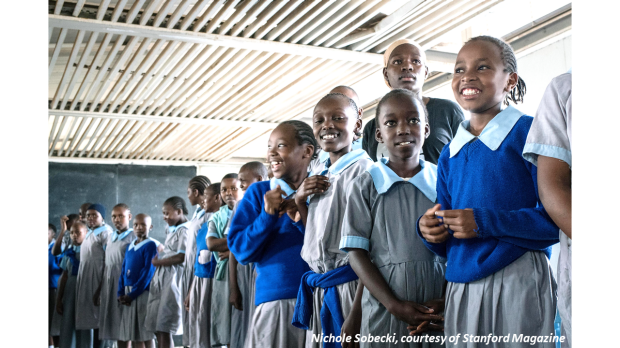
The Stanford /Packard Gender-Based Violence Prevention Collaboration (GBV PC) was founded in 2013 by an interdisciplinary group of researchers who share a passion for preventing gender-based violence, especially sexual assault, both locally and globally. The group includes experts in in public health, statistics, adolescent health, and behavioral medicine.
The GBV PC is working on a wide variety of projects, including running the largest randomized controlled trial of empowerment training for male and female adolescents in the informal settlements around Nairobi, Kenya, implementing and researching an intervention for assault prevention in high schools in San Jose, California, and working with Stanford University to identify appropriate sexual assault prevention programs to bring to campus.
Updated 5/15/2020
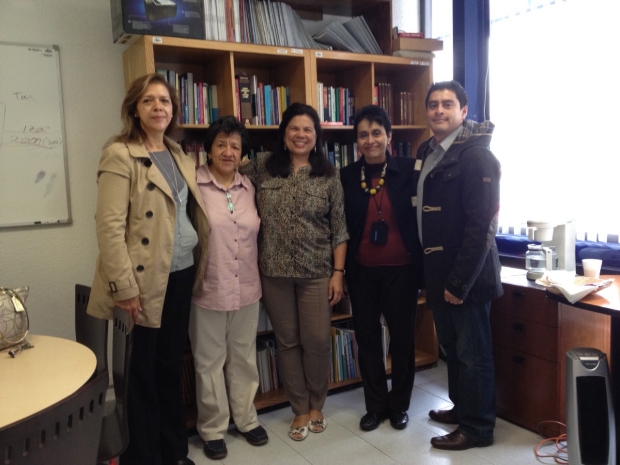
Dr. Maldonado and colleagues in Mexico
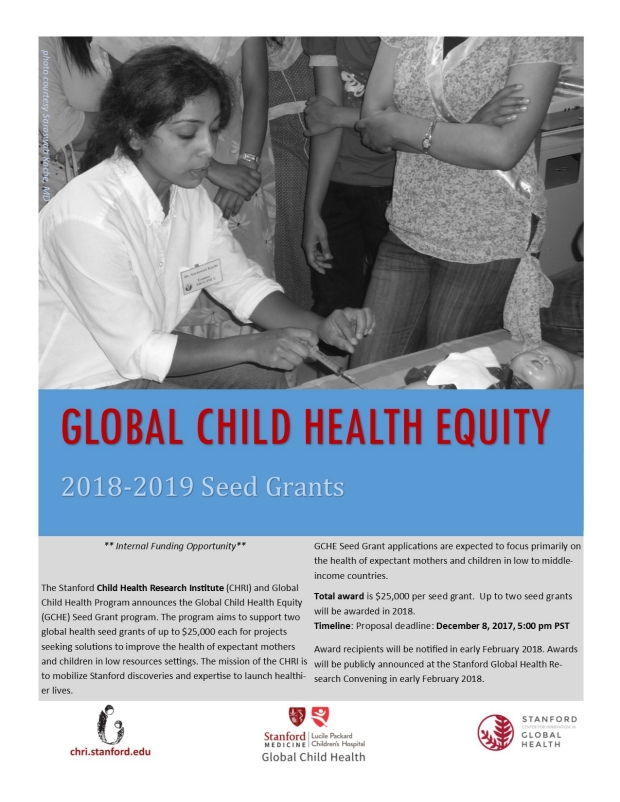
GCHEP Seed Grants
Click to learn more about the Global Child Health Equity Program Seed Grants for Stanford researchers.