Stanford Genome Technology Center
Our center develops new technologies to address important biological questions that otherwise would not be feasible. Our successes can involve improvements to existing technologies or completely new inventions, both of which aim to increase speed and accuracy while decreasing cost. In turn, once a new technology has been developed or advanced, it can often drive the perception of what is possible in the realm of experimental biology. Historically, this synergism between biology and technology has thrived at SGTC as applied to yeast functional genomics and large-scale sequencing efforts. In the next phase of our evolution we will use yeast as the test-bed of advanced technologies to enable novel solutions to the greatest challenges facing human health, most noteworthy being Myalgic Encephalomyelitis or Chronic Fatigue Syndrome (ME/CFS).
Our family is directly affected by CFS. Our son, Whitney Dafoe, is severely ill with the disease. He was a fine arts photographer, winning awards and judged shows. See his website at www.whitneydafoe.com. Due to his progressing illness, he had to move back home at age 27 so we could care for him. He is now completely bedridden, is unable to talk or text, and can’t tolerate any stimulation, even human contact. We couldn’t be more motivated to find answers!
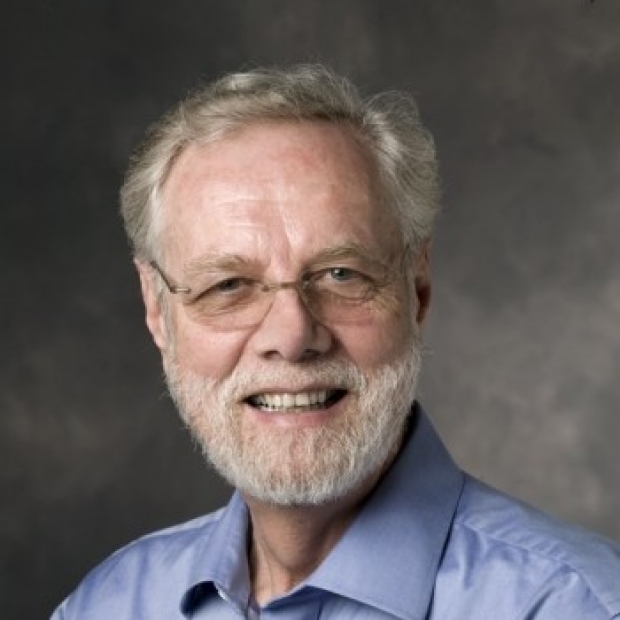
The vision of the Chronic Fatigue Syndrome Research Center at Stanford (CFSRC) is to discover causes, a molecular diagnosis, and a cure for CFS. The research is directed by Dr. Ronald W. Davis, PhD, Professor of Biochemistry and of Genetics and Director of the Stanford Genome Technology Center. He does cutting edge, innovative, interdisciplinary research and technology development on cancer, immunology, genetics, infectious disease, novel drug development, and nanofabrication of diagnostic instrumentation. He won the Gruber Prize in Genetics in 2011.
The CFSRC operates within the Stanford Genome Technology Center. The scientists work in collaboration with scientists and doctors from many disciplines, from all over the world. Similarly, for research on CFS, the plan is to recruit world class scientists and doctors with different specialties for collaborations or to fund their independent work. This disease affects many systems of the human body, requiring a diversity of knowledge to unlock its secrets. Increasing the diversity of specialties of the researchers will mean that all aspects of this disease are considered in our effort to understand CFS at the molecular level, not just the “symptom” level. Thus, the Center will increase the participation of the mainstream scientific community in CFS. Involving well known prestigious university and research institute scientists with a track record of government funding will not only impact CFS directly by generating new knowledge, but will also have a ripple effect in generating awareness and legitimacy for this devastating disease. The Center is dedicated to research of the highest quality with openly shared data (in compliance with confidentiality laws). This kind of research opens new opportunities for discovery, since it will utilize state-of-the-art methods and technologies that have never before been applied to CFS, and will employ a collaborative, multi-disciplinary approach, which will investigate all aspects of CFS in a comprehensive manner. Dr. Ronald W. Davis, who already has demonstrated success in this approach, is uniquely positioned to spearhead this attack on CFS at the molecular level.
Current Research Projects
Nanoneedle Diagnostic
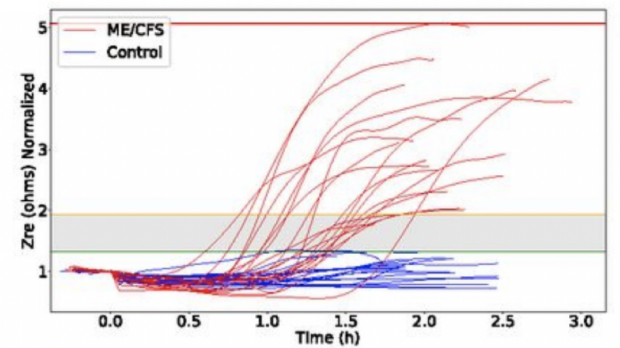
Taking advantage of advancements in micro/nanofabrication, direct electrical detection of cellular and molecular properties, microfluidics, and artificial intelligence (AI) techniques, we developed the first nanoelectronics blood-based assay that can establish a diagnostic biomarker and a drug-screening platform for ME/CFS.
Red Blood Cell Deformability
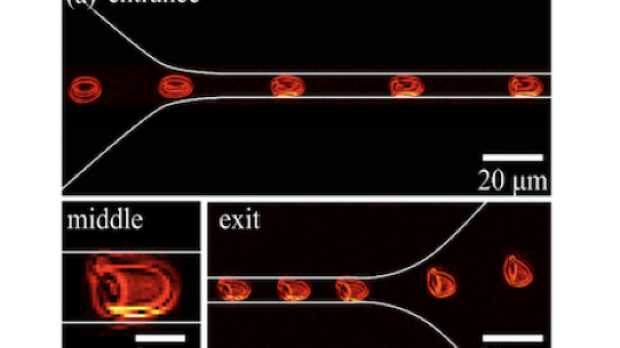
One cause of reduced microcirculation is reduced red blood cell (RBC) deformability, and we hypothesize that a reduction of deformability in ME/CFS patients’ RBCs may contribute to a subgroup of symptoms and offers an opportunity to develop a quantitative microfluidic assay, which can lead to better care for ME/CFS patients.

MAGESTIC Synthetic Genomics
We have developed several next-generation tools that leverage advances in synthetic biology and CRISPR/Cas9 genome editing. These tools enable high-throughput modification of the yeast genome at unprecedented scale and precision. We are applying these tools to produce new natural product chemicals by expressing biosynthetic pathways from other organisms in an optimized yeast host.